规格
- 货号
- R3548
- 比例
- OO1:76
- 轨距
- 16.5 毫米
- 类型
- 机车
- 铁路公司
- British Railways
- 全长(含缓冲器)
- 287 毫米
厂商原文
- Class
- Standard 4MT
- Colour
- Black
- DCC Status
- DCC Ready 8 pin socket
- Designer
- Robert Riddles
- Finish
- Painted
- Gauge
- OO
- Item Height - Without Packaging (cm)
- 6
- Item Length - Without Packaging (cm)
- 28.7
- Item Scale
- 1:76 Scale 00 Gauge
- Item Weight - Without Packaging (kg)
- 0.63
- Item Width - Without Packaging (cm)
- 11.2
- License
- No
- Livery
- Early Crest
- Minimum Curve (mm)
- Radius 2
- Motor
- 5 Pole Skew wound
- Number of Parts
- 1
- Operator
- British Railways
- Wheel Configuration
- 4-6-0
厂商没有给出的字段直接不显示,不留空行。
厂商原文
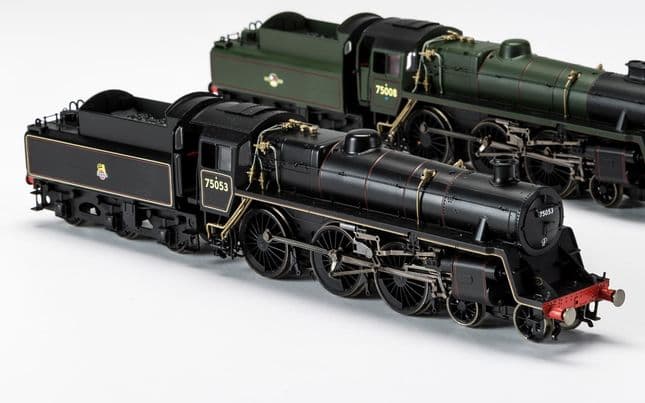
When the London Midland Scottish Railway came up with its initial standard designs in 1947, it was considered that there was no call for a mixed traffic Class 4, 4-6-0 locomotive. The duties for which the 4-6-0 design were suited to were amply covered by existing traction types and it wasn't until Nationalization in 1948, that the Western Region of British Rail felt that this type of locomotive was required for use on its secondary route services. The restricted axle loading for the coastal routes to Aberystwyth and Pwllheli precluded the use of the heavier Standard Class 5, whilst an update on the GWR Manor design was not feasible because of gauging issues on the other British Rail regions, who were also looking to replace their ageing locomotive stock. Robert Riddles, British Rail's Head of Mechanical and Electrical Engineering, set about designing a new locomotive, principally from BR's Brighton Works, as a solution to this problem. Many of the components for the Standard Class 4MT were similar to those used in the Standard Class 5 and as a class, there were few significant variations during the course of their construction. Between mid-May 1951 and January 1956, eighty locomotives were built at BR's Swindon Works, in six Lots, a final order of ten locomotives for the Eastern Region being cancelled in September 1956. The first ten locomotives were delivered to the Western Region between May and October 1951 and by the end of the year were all operating from Shrewsbury Shed. Employed on local and semi-fast duties the engines were ideally suited to their task, but attempts to displace Class 5 duties on heavy passenger and goods traffic proved unpopular, as happened on the former LNWR central Wales line to Swansea. The Class 4s suffered from poor steaming under load and were under-powered, their timekeeping suffering as a consequence. Deliveries continued, with the London Midland region receiving three batches of locomotives, the Western a further batch and the Southern receiving a batch. By the beginning of 1956, Class 4MTs were operating across the network, from Dover to Scotland, Plymouth to Cambridge, mostly paired to their original tenders, of which three types were used. The first fifty were paired with BR2 3,500 gallon tenders, whilst fifteen received BR2A 3,500 gallon tenders. The Southern Region, with its lack of water troughs, had a requirement for a greater capacity tender and so the fifteen locomotives allocated here were paired with BR1B 4,725 gallon tenders. Withdrawal of the class began in October 1964, with No.75067 and continued on a regular basis until August 1968, when the last five were withdrawn. Six locomotives were saved for preservation, two purchased direct from BR and four being rescued from Woodham's scrapyard at Barry. Locomotive 75053 was built at Swindon, to Lot 408, in late 1956 and entered traffic with the London Midland Region at Chester Midland. A well-travelled locomotive, 75053 spent alternate spells at Ryhll and Chester Midland before moving on to Mold Junction in September 1960. In April 1962, a move to Bletchley was followed in January 1965 by allocation to Stoke-on-Trent, from where 75053 was withdrawn in September 1966. Maximum curve Hornby 2nd radius + / 438mm+.
厂商发布的英文原文。
Hornby 的其他商品
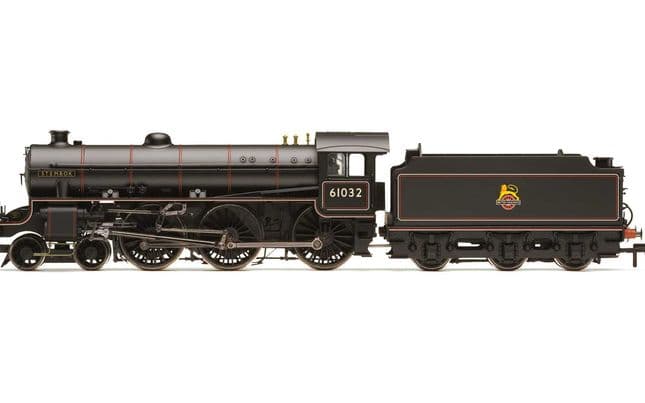
BR, B1 Class, 4-6-0, 61032 'Stembok' - Era 4
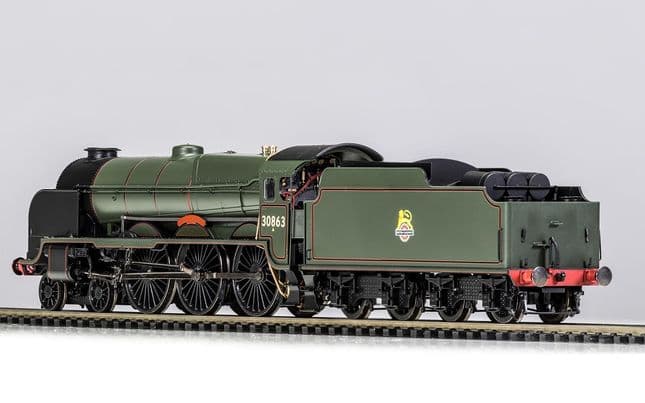
BR, Lord Nelson Class, 4-6-0, 30863 ‘Lord Rodney’ - Era 4
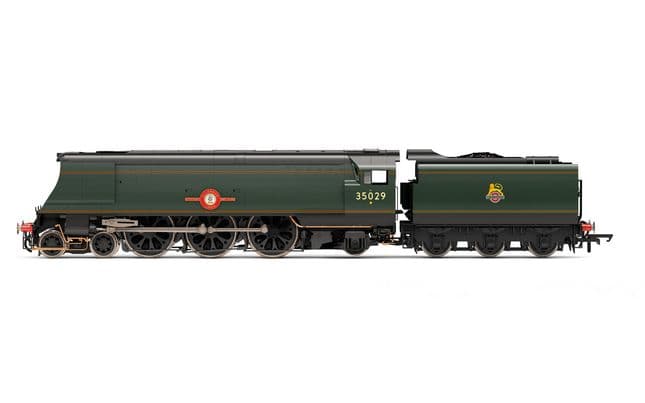
BR, Merchant Navy Class, 4-6-2, 35029 ‘Ellerman Lines’ - Era 4
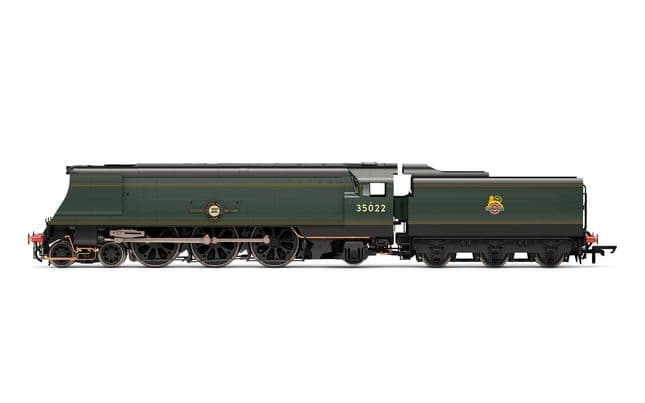
BR, Merchant Navy Class, 4-6-2, 35022 'Holland America Line' - Era 4
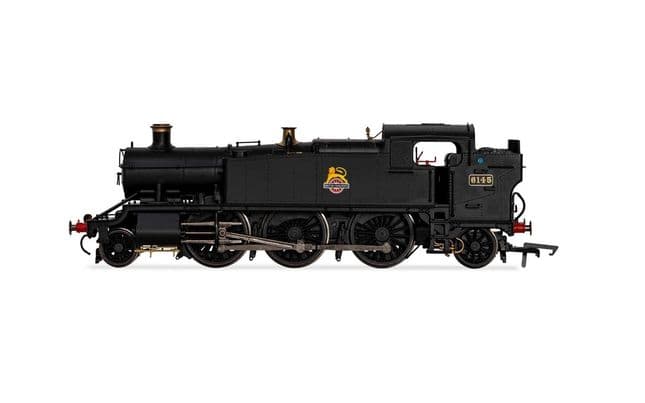
BR, Class 61xx 'Large Prairie', 2-6-2T, 6145 - Era 4
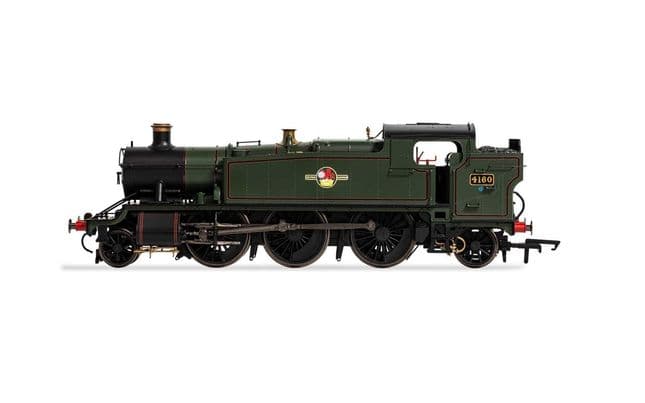
BR, Class 5101 'Large Prairie', 2-6-2T, 4160 - Era 5
BR, Class 5101 'Large Prairie', 2-6-2T, 4160 - Era 5