

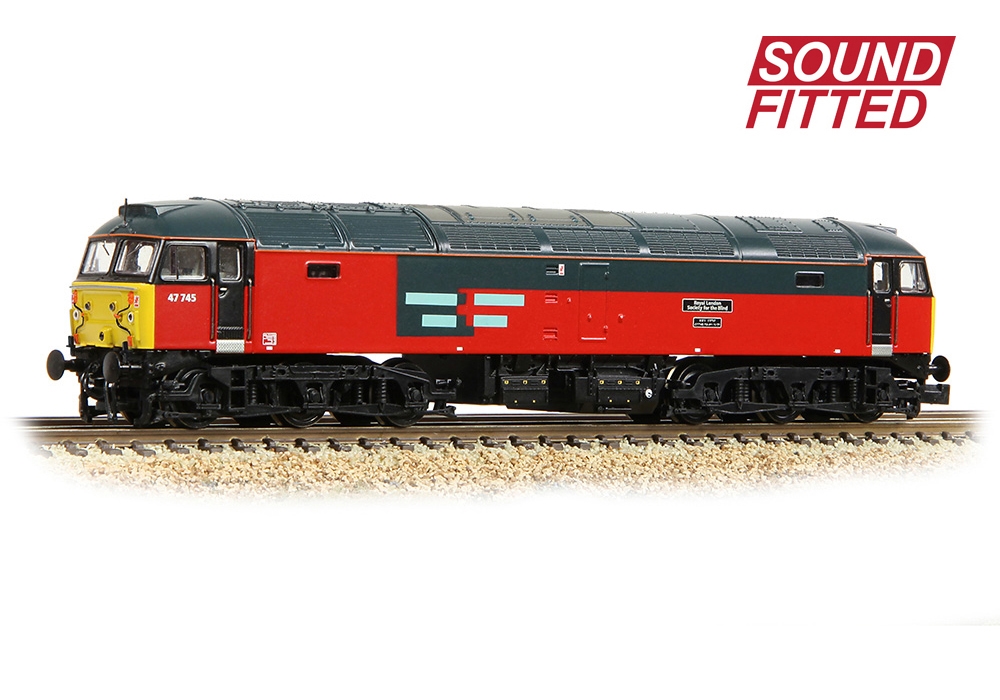
Class 47/7 47745 'Royal London Society For The Blind' RES
Graham Farish · 机车 · N
我们帮你买、验货、寄给你。付款之前,你会先看到包含运费的准确总价。
到厂商官网查看 ↗规格
- 货号
- 372-262SF
- 比例
- N1:148–160
- 轨距
- 9 毫米
- 类型
- 机车
厂商没有给出的字段直接不显示,不留空行。
厂商原文
The popular BR Class 47 Diesel Locomotive returns to the Graham Farish range with models of the ‘Crewe-Cut’ locomotives available for the first time thanks to the development of new tooling that further expands the range of Class 47s that can be modelled in N scale. Many Class 47s had the cowling around their bufferbeams removed in later life, changing the appearance of the lower front end and with this work usually being undertaken at Crewe Works, the resultant locomotives were commonly termed ‘Crewe-Cut’ machines. No. 47745 is one such machine, originally built as D1967, in 1983 it was fitted with Electric Train Heating (ETH) and became 47603 and later still was renumbered to 47745 in 1994 following the fitting of extended range fuel tanks and cab-front jumper cables when allocated to Rail Express Systems. Named ‘Royal London Society for the Blind’ in 1994, complete with a set of nameplates in Braille, the locomotive retained its Rail Express Systems livery until it was cut up in 2004. Further developments to the Graham Farish Class 47 come in the form of technical advancements, with an upgraded specification which now boasts a Next18 DCC decoder interface, pre-fitted speaker, cab lighting (when used on DCC) and independent control of the directional lights at each end. With the Next18 interface and pre-fitted speaker, SOUND FITTED models can now be offered for the first time. DETAIL VARIATIONS SPECIFIC TO THIS MODEL GRAHAM FARISH CLASS 47 SPECIFICATION MECHANISM: DETAILING: LIGHTING: DCC: SOUND: LIVERY APPLICATION: SOUNDS F0 - Directional Lights - On/Off (plus Light Switch Sound) F1 - On - Warm Engine Start / On, Off - Failed Engine Start / On, Off, On - Cold Engine Start F2 - Brake F3* - Horn (Playable) F4* - Two-Tone Horn F5 - Heavy Load F6 - Coasting (Manual notch Down if F22 On) F7 - Maximum Revs (Manual notch Up if F22 On) F8** - On - Coupling Up / Off - Uncoupling F9 - Flange Squeal (Speed Related) F10 - Fan Noise F11 - Air Dump F12 - On - Guard’s Whistle / Off - Driver’s Response Horn F13 - Cab Lights On/Off No. 1 (plus Light Switch Sound) F14 - Cab Lights On/Off No. 2 (plus Light Switch Sound) F15 - Auto Uncouple Cycle F16 - AWS Horn F17 - AWS Bell F18 - On - Sound Fades Out / Off - Sound Fades In F19 - Mute (Latch) / Volume Cycles 6 Levels (Trigger) F20 - No. 1 End (Fan) Directional Lights Off F21 - No. 2 End (non-Fan) Directional Lights Off F22 - Manual Notching Logic On/Off (control with F6 & F7) F23 - Spirax Valve F24 - Station Announcement F25 - On - Driver’s Door Open / Off - Driver’ Door Shut *Alternative Horn sounds and behaviour can be selected via CV changes ** Alternative coupling sounds can be selected via CV changes Analogue Users: Please note that any automated drive sounds will be played when this model is used on analogue control (DC) straight from the box! CLASS 47 HISTORY Towards the end of the 1950s, British Railways began planning a new fleet of diesel locomotives and after investigating several prototypes, BR decided to place an order with Brush Engineering for 20 locomotives during February 1961. The resulting design became the iconic Brush Type 4 Diesel locomotive, a practical, versatile design with a very distinctive cab. Powered with a Sulzer engine and initially rated at 2,750hp, the locomotive could achieve a top speed of 75mph with a tractive effort of 55,000lb. Building commenced in January 1962 and the first locomotive No. D1500 appeared in late September of the same year with test runs on the London Midland Region and Western Region. The design was a success and BR went on to order a total of 512 with continuous production through to early 1967, forming the largest single class of main-line diesel locomotives in the UK. During this time and subsequent years, several variations appeared with an increase in speed and tractive effort to 95mph and 62,000lb respectively. Originally fitted with four character train reporting head-codes, these changed to marker lights, with the addition of high intensity lights and roof aerials in the late 1980s. Other variations involved the fitting of different types of steam heating boiler for early BR coaching stock, later replaced with electric train heating for use with modern rolling stock. The numbering system started with four figures but changed to five with the introduction of the TOPS coding system which saw the locomotives classified as Class 47 Diesels with variations such as 47/0, 47/2, 47/3, 47/4 and 47/7. By the end of the 1990s, half of the Class 47 fleet had been withdrawn or scrapped, 33 have been converted into Class 57 locomotives and several have been preserved, including the original No. D1500, now numbered 47401.
厂商发布的英文原文。
Graham Farish 的其他商品
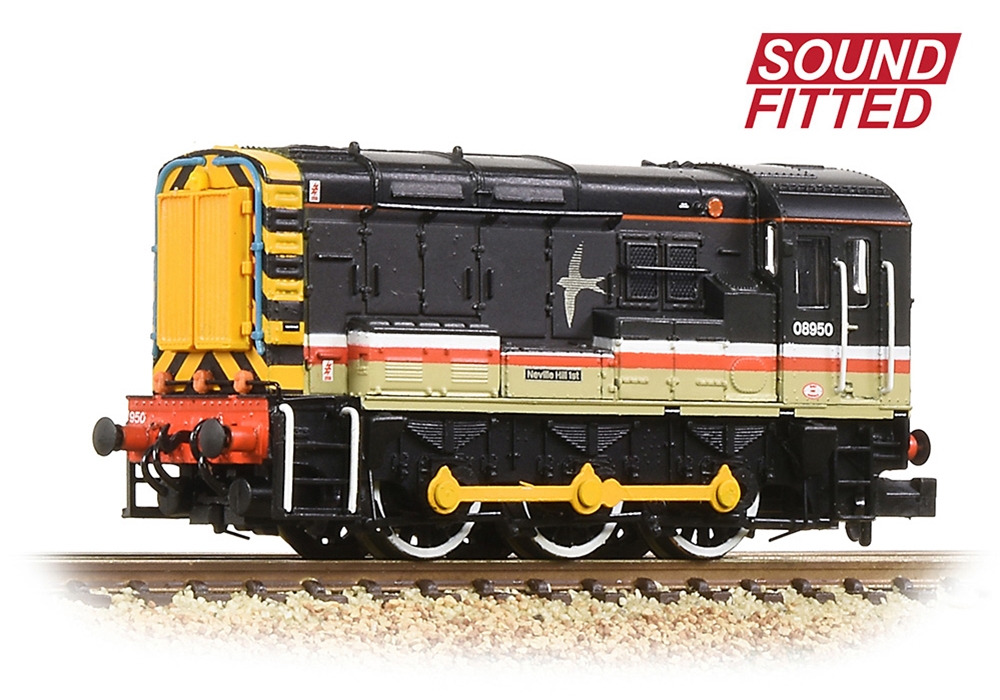
Class 08 08950 'Neville Hill 1st' BR InterCity (Swallow)
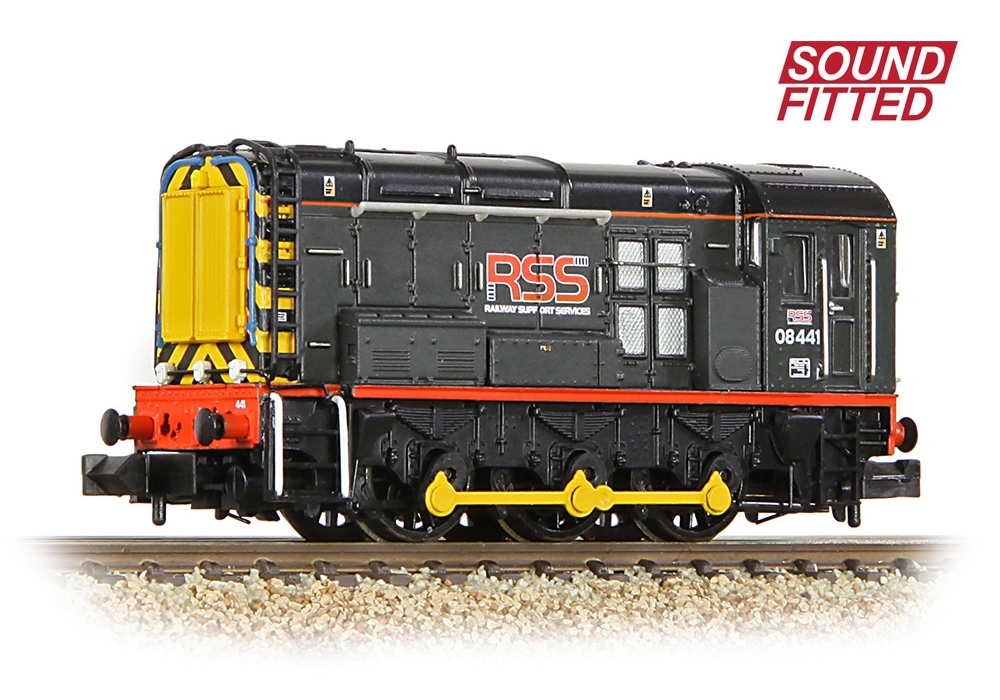
Class 08 08441 RSS Railway Support Services
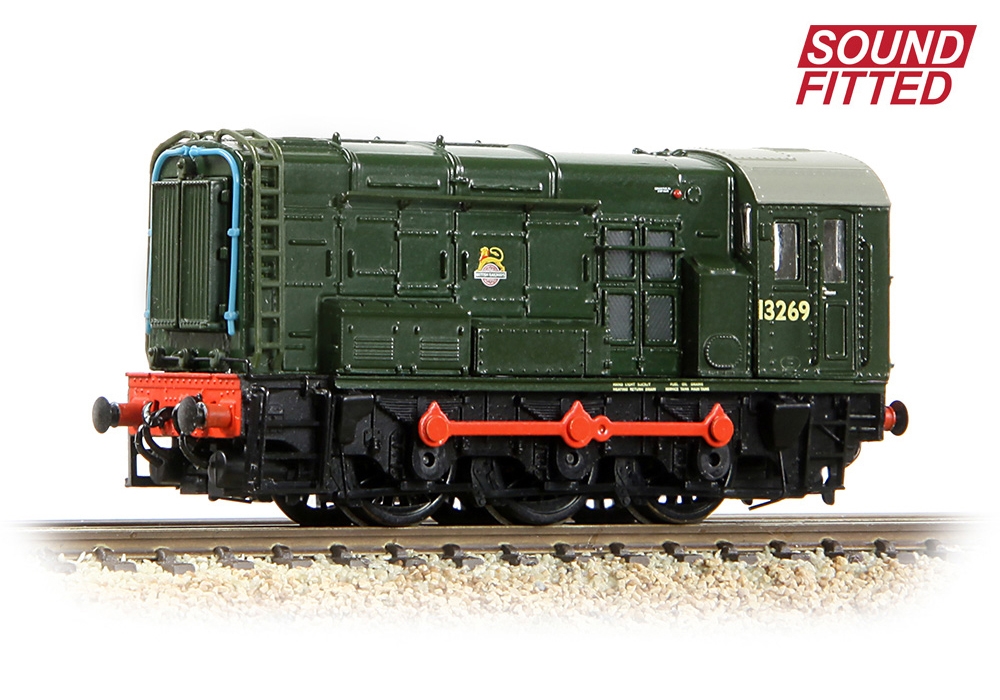
Class 08 13269 BR Green (Early Emblem)
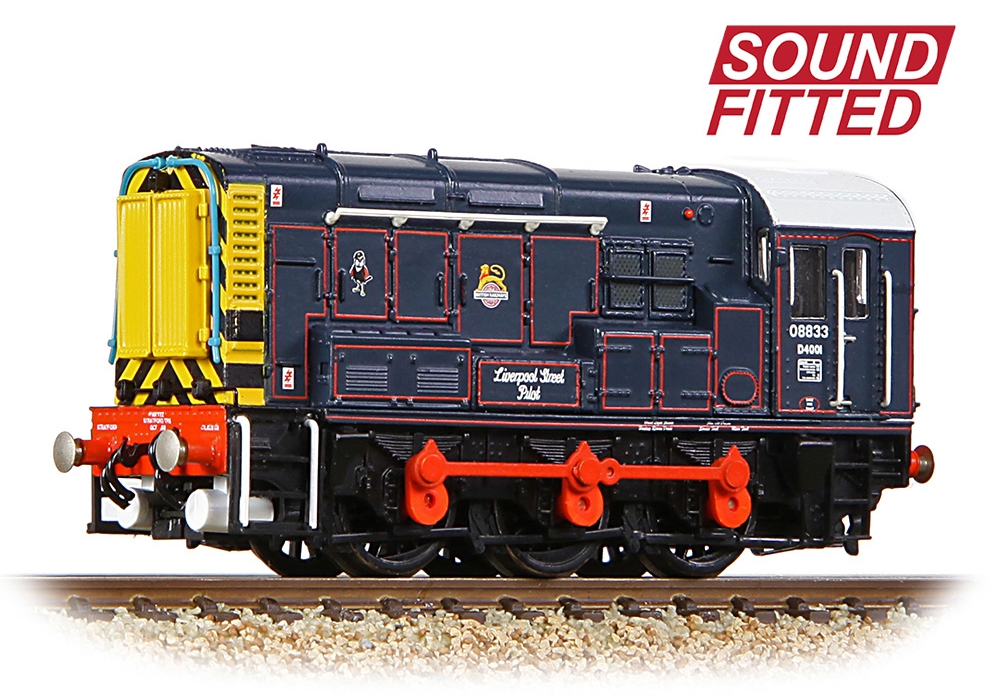
Class 08 08833 'Liverpool Street Pilot' BR/GER Lined Blue (Early Em.)
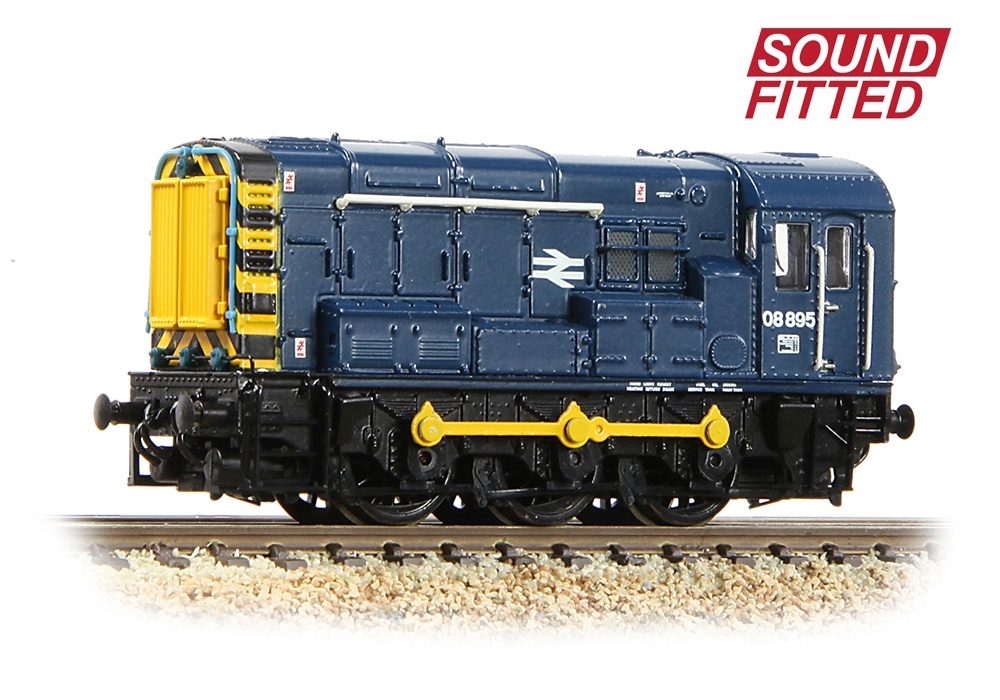
Class 08 08895 BR Blue
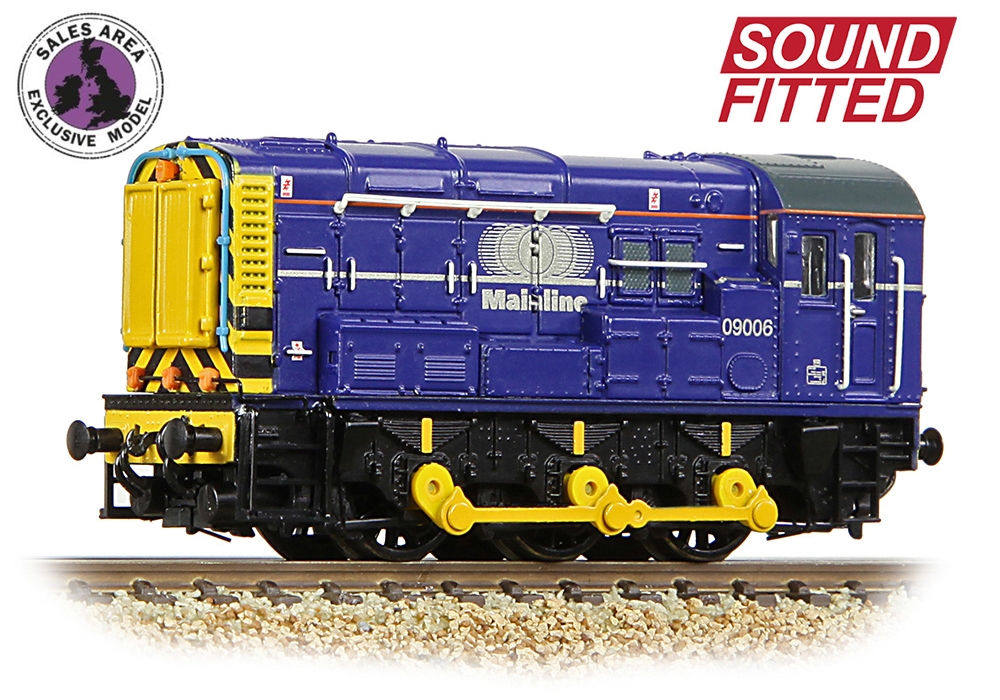
Class 09 09006 Mainline Freight
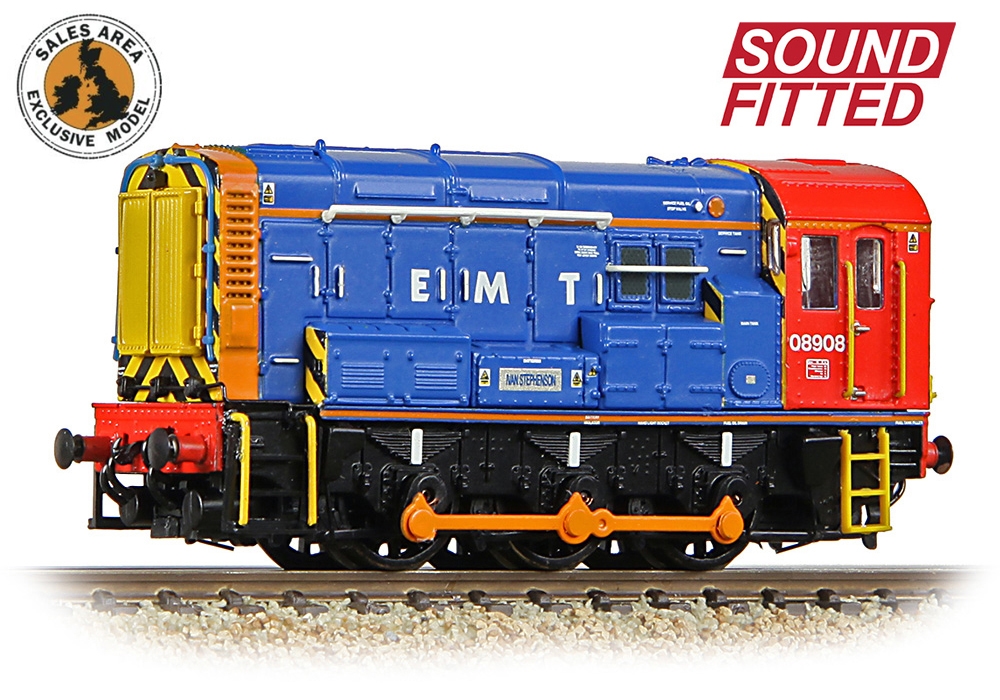
Class 08 08908 East Midlands Trains
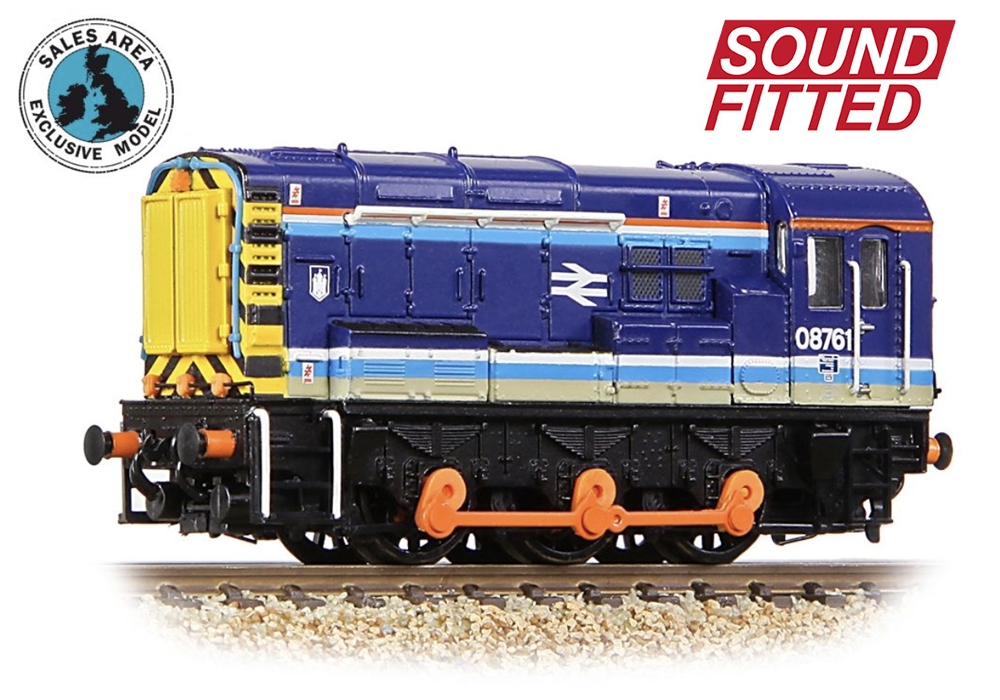
Class 08 08761 BR Provincial
← 返回 Graham Farish全部目录商品读读厂商指南